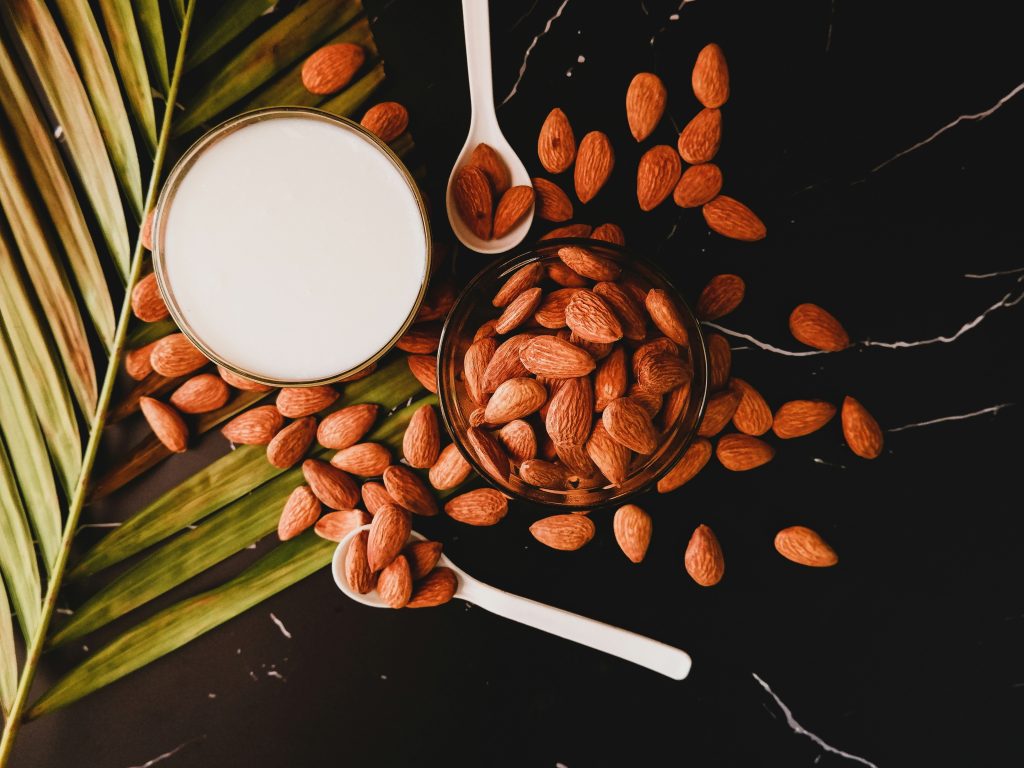
Can replacing almond milk with Greek yogurt in smoothies improve HbA1c?
Short answer: it may help modestly—but only as part of a consistent, higher-protein dietary pattern.
For adults over 45 managing prediabetes, small daily swaps—like what goes into your smoothie—can add up. While almond milk and Greek yogurt are both considered “healthy,” they affect blood sugar very differently. Understanding that difference is key if your goal is improving Greek yogurt HbA1c outcomes over time.
Table of Contents
ToggleUnderstanding HbA1c — Why It Matters
HbA1c (glycated hemoglobin) reflects your average blood glucose over ~2–3 months, making it one of the most reliable markers for prediabetes and metabolic health (Centers for Disease Control and Prevention, 2023).
Because it’s a long-term marker, single meals don’t move HbA1c much. What matters is what you do consistently—day after day (American Diabetes Association, 2024).
Almond Milk vs Greek Yogurt — Key Differences
At a glance, both work as smoothie bases. Nutritionally, they’re very different:
- Greek yogurt
- High protein (10–20g per serving)
- Moderate carbs (lactose)
- Naturally rich in calcium and probiotics
- Unsweetened almond milk
- Very low protein
- Very low carbs
- Minimal metabolic impact
The biggest difference: protein content, which plays a major role in blood sugar regulation.
How Greek Yogurt May Influence Blood Sugar
Replacing almond milk with Greek yogurt can shift how your body handles glucose:
- Slower digestion: Protein delays gastric emptying, slowing glucose absorption
- Reduced glucose spikes: Higher-protein meals are linked to smaller post-meal glucose rises
- Improved satiety: Protein helps reduce overall calorie intake, indirectly supporting metabolic health
These effects don’t directly “lower HbA1c,” but they can improve daily glucose patterns, which may translate into small long-term improvements.
What Research Says About Greek Yogurt and HbA1c
The evidence is indirect but promising:
- Higher yogurt intake is associated with lower risk of type 2 diabetes (Aune et al., 2013)
- Higher-protein diets show modest HbA1c improvements, especially when replacing refined carbs (Dong et al., 2013)
- Fermented dairy may support insulin sensitivity, though results vary
Bottom line: Greek yogurt can support glycemic control—but it’s not a standalone fix.
What About Almond Milk?
Unsweetened almond milk is:
- Low-glycemic and neutral
- Unlikely to spike blood sugar
- But not shown to improve HbA1c on its own
Think of it as “doing no harm,” rather than actively improving metabolic markers.
Does the Swap Actually Improve HbA1c?
Sometimes—but context matters.
Switching to Greek yogurt is most likely to help when:
- It increases total daily protein
- It replaces higher-sugar ingredients
- It’s part of a consistent eating pattern
Even then, improvements are typically modest, not dramatic (American Diabetes Association, 2024).
Common Misconceptions
Misconception | Reality |
“Any healthy swap lowers HbA1c” | Only consistent patterns matter |
“Almond milk is better for blood sugar” | It’s neutral, not beneficial |
“Greek yogurt spikes glucose” | Protein can actually stabilize it |
“Smoothies are always healthy” | Liquid calories can still spike blood sugar |
Why Adults Over 45 May Benefit More
With age:
- Insulin sensitivity tends to decline
- Muscle mass decreases (key for glucose uptake)
Higher protein intake—like from Greek yogurt—may help support muscle maintenance and metabolic function (Basu et al., 2013).
How to Use This Daily (Practical Smoothie Upgrade)
If you want this swap to actually work:
Build a blood sugar–friendly smoothie:
- Base: plain Greek yogurt
- Add: berries (low glycemic)
- Add: fiber (chia or flax seeds)
- Avoid: fruit juice, sweetened milks
This combination aligns with dietary patterns associated with better glycemic control (American Diabetes Association, 2024).
Top Evidence-Based Product Tips (Affiliate-Friendly)
If you’re optimizing smoothies for blood sugar:
Look for:
- Greek yogurt:
- Plain, unsweetened
- ≥15g protein
- No added sugars
- Almond milk:
- Unsweetened
- ≤1g sugar
- Minimal ingredients
Who this helps most:
- Adults with prediabetes
- Those struggling with hunger or cravings
- Anyone under-consuming protein
What We Still Don’t Know
- No direct trials on this exact smoothie swap
- Individual response varies (gut health, insulin sensitivity)
- HbA1c changes from single habits are hard to isolate
More long-term human trials are needed.
Final Takeaway: Greek Yogurt HbA1c Impact
Replacing almond milk with Greek yogurt may support better blood sugar control, primarily by increasing protein and improving post-meal glucose response.
However, meaningful HbA1c improvement comes from consistent dietary patterns—not one ingredient swap.
Disclaimer
This content is for informational purposes only and is not a substitute for professional medical advice. Always consult a qualified healthcare provider before making dietary or health changes. We may earn a commission from qualifying purchases.
References
- Centers for Disease Control and Prevention. (2023). A1C test for diabetes and prediabetes.
https://www.cdc.gov/diabetes/managing/managing-blood-sugar/a1c.html - American Diabetes Association. (2024). Standards of Care in Diabetes—2024. Diabetes Care.
https://diabetesjournals.org/care/issue/47/Supplement_1 - Aune, D., et al. (2013). Dairy products and the risk of type 2 diabetes. American Journal of Clinical Nutrition.
https://pubmed.ncbi.nlm.nih.gov/23945722/ - Dong, J. Y., et al. (2013). High-protein diets and glycemic control. British Journal of Nutrition.
https://pubmed.ncbi.nlm.nih.gov/23829939/ - National Center for Biotechnology Information. (n.d.). Article available on PubMed Central (PMC12362953).
https://pmc.ncbi.nlm.nih.gov/articles/PMC12362953/