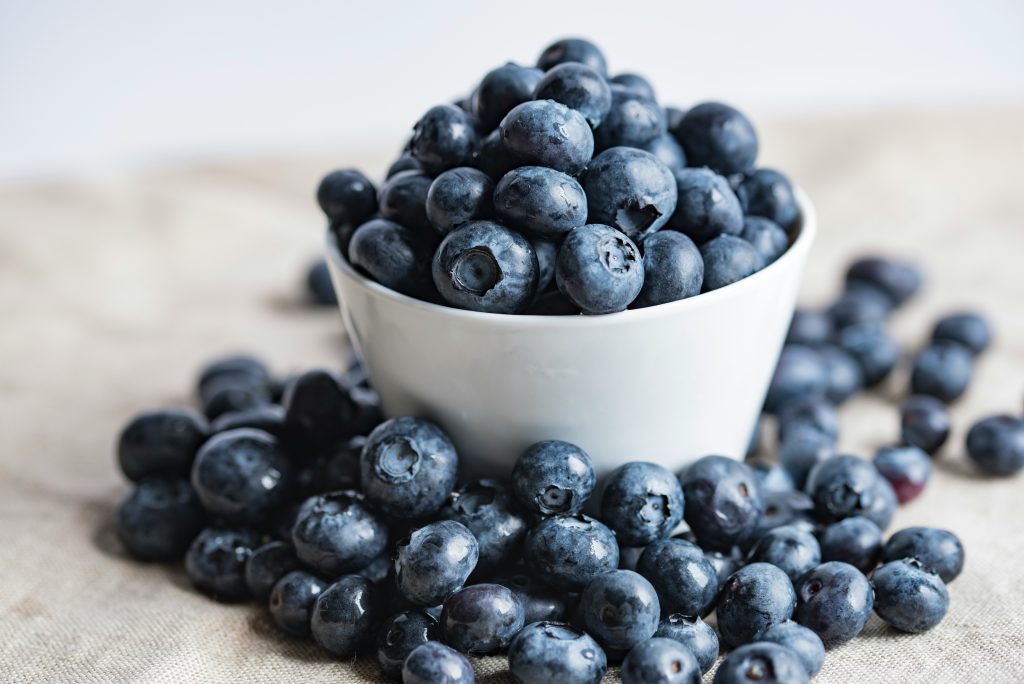
Blueberries are widely recognized for their high anthocyanin content—plant compounds linked to antioxidant activity and vascular health markers in human studies. But a common question comes up when making smoothies:
Does blending destroy blueberry antioxidants?
The short answer: not entirely. Blending can slightly reduce some polyphenols due to oxygen and heat exposure—but it may also increase how much your body can actually absorb. In practice, the net effect is more nuanced than simple “loss vs preservation.”
Table of Contents
ToggleWhat Makes Blueberries a Polyphenol Powerhouse?
Polyphenols are a broad class of plant compounds that include flavonoids, phenolic acids, and anthocyanins. Blueberries stand out because of their high anthocyanin concentration, which contributes to their deep color and biological activity.
However, anthocyanins are chemically sensitive. They can degrade when exposed to:
- Oxygen
- Heat
- Light
- Enzymatic activity
This instability is central to understanding what happens during blending.
What Happens to Antioxidants During Blending?
Blending is more than just mixing—it actively changes the structure of the fruit.
Key processes include:
- Cell wall breakdown → releases bound polyphenols
- Oxygen incorporation → increases oxidation potential
- Enzyme activation (e.g., polyphenol oxidase) → can degrade phenolics
- Heat generation → especially with longer blending times
This creates a dual effect:
More antioxidants are released
But some are simultaneously degraded
Research on food structure shows that mechanical processing can improve nutrient bioaccessibility—the fraction available for absorption.
High-Speed vs Low-Speed Blending: What’s the Difference?
High-Speed Blending (e.g., high-RPM systems)
Potential benefits:
- Greater breakdown of plant tissue
- Increased release of polyphenols
- Potentially higher bioaccessibility
Potential downsides:
- More heat buildup with longer blending
- Greater oxygen exposure → oxidation
- Faster anthocyanin degradation at higher temperatures
Anthocyanins are particularly sensitive to heat, with accelerated degradation observed at elevated temperatures.
Low-Speed Blending
Potential benefits:
- Less heat generation
- Reduced aeration (oxygen exposure)
- Slower oxidation
Tradeoffs:
- Less efficient cell wall breakdown
- Potentially lower release of bound polyphenols
Bottom line:
- High-speed = more extraction, more degradation risk
- Low-speed = more preservation, less extraction
Does Blending Destroy Antioxidants—or Improve Absorption?
This is where it gets interesting.
Even if lab measurements show a small drop in polyphenol content, human studies suggest that processed fruits can still increase circulating polyphenol metabolites, indicating meaningful absorption.
So:
- Total antioxidant content may decrease slightly
- Bioavailability may increase
That distinction matters more than raw numbers in the glass.
Fresh vs Frozen Blueberries: Does It Matter?
Frozen blueberries are often processed shortly after harvest, which can help preserve anthocyanins.
Some research shows:
- Comparable or even better retention vs fresh berries stored over time
- Lower blending temperatures (helpful for antioxidant stability)
Practical tip: Frozen blueberries may help reduce heat buildup during blending while maintaining nutrient quality.
Practical Tips to Preserve Blueberry Antioxidants
If your goal is to maximize antioxidant retention and absorption:
- Use shorter blending times
- Start with frozen fruit to limit heat
- Avoid letting smoothies sit (oxidation increases over time)
- Blend fuller containers to reduce oxygen incorporation
- Drink immediately after blending
Top Evidence-Based Smoothie Optimization Tools
To balance extraction and preservation:
High-speed blenders (best for bioaccessibility):
- Short, pre-programmed cycles help limit heat exposure
- Ideal for fiber breakdown and smoother texture
Lower-speed or pulse blending:
- Useful for minimizing oxidation
- Better for quick, minimal-processing smoothies
Optional add-ons:
- Vacuum blenders (emerging category) may reduce oxidation, though human outcome data is still limited
Common Myths (Quick Reality Check)
Myth: Blending destroys all antioxidants
Reality: Some loss occurs, but many compounds remain—and absorption may improve
Myth: High-speed blenders “cook” smoothies
Reality: Heat depends mostly on blending time, not just speed
Myth: Low-speed blending is always better
Reality: It may preserve compounds but reduce extraction
Real-World Takeaway
In practical terms, blending does not meaningfully “destroy” blueberry antioxidants.
What matters far more:
- Total fruit intake
- Consistency of consumption
- Overall diet quality
Small differences in blending method are unlikely to significantly impact health outcomes for most people.
Conclusion: Does Blending Destroy Blueberry Antioxidants?
Blending may slightly reduce measurable anthocyanins—but it can also increase bioaccessibility, which may offset those losses.
The net effect:
You still get meaningful antioxidant exposure from blueberry smoothies
And in some cases, potentially better absorption
Focus on consistency, not perfection.
Disclosure
This content is for informational purposes only and is not a substitute for professional medical advice. We may earn a commission from qualifying purchases.
References
- Cassidy, A., et al. (2013). High anthocyanin intake and cardiovascular risk. Circulation.
https://www.ahajournals.org/doi/full/10.1161/CIRCULATIONAHA.112.122408 - Rodriguez-Mateos, A., et al. (2014). Blueberry flavonoids and vascular function. American Journal of Clinical Nutrition.
https://pubmed.ncbi.nlm.nih.gov/25044909/ - Khoo, H. E., et al. (2017). Anthocyanins and stability. Advances in Nutrition.
https://pmc.ncbi.nlm.nih.gov/articles/PMC5613902/ - Patras, A., et al. (2010). Thermal stability of anthocyanins. Food Chemistry.
https://www.sciencedirect.com/science/article/abs/pii/S0924224409002271 - Pimpão RC, Ventura MR, Ferreira RB, Williamson G, Santos CN. (2015) Phenolic sulfates as new and highly abundant metabolites in human plasma after ingestion of a mixed berry fruit purée. British Journal of Nutrition.
https://www.cambridge.org/core/journals/british-journal-of-nutrition/article/phenolic-sulfates-as-new-and-highly-abundant-metabolites-in-human-plasma-after-ingestion-of-a-mixed-berry-fruit-puree/7D1A9E1F676AA2DC01B39B184105F978