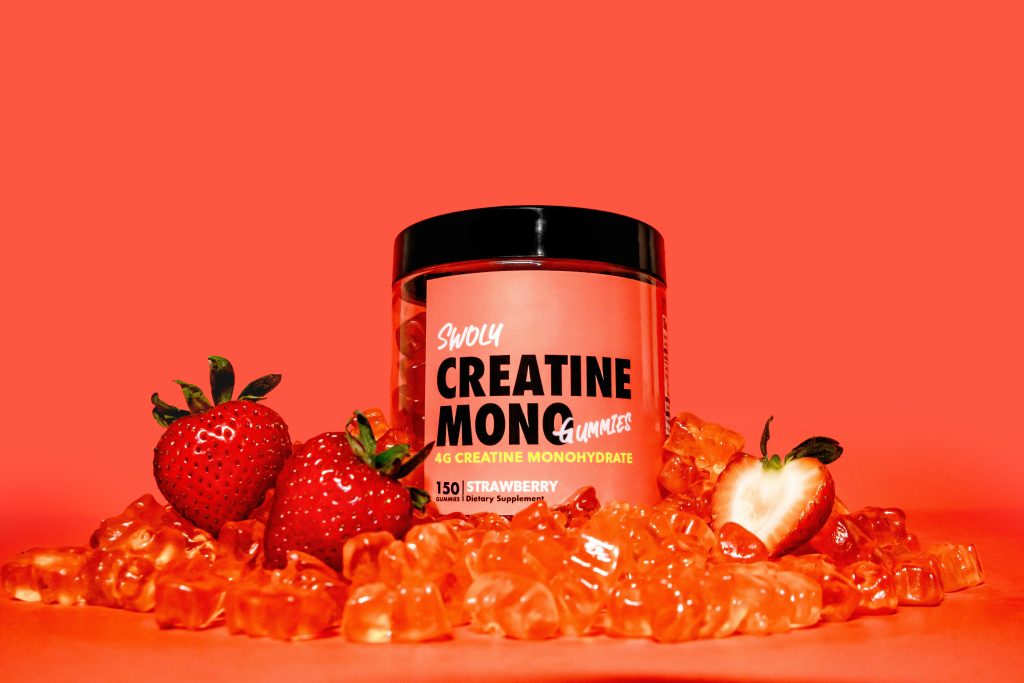
For men over 40 trying to preserve strength and muscle, creatine monohydrate is one of the most researched and effective supplements available. But does adding 5 grams of creatine to a post-workout smoothie actually improve lean mass over time?
Research suggests it may. Studies using DEXA scans (dual-energy X-ray absorptiometry) — the gold standard for body-composition analysis — show that creatine supplementation combined with resistance training can increase lean body mass in middle-aged and older adults (Candow et al., 2019).
If you already drink a post-workout smoothie, adding creatine may be a simple, evidence-based way to support muscle maintenance and performance as you age.
Table of Contents
ToggleWhy Creatine Matters More After 40
After age 40, adults often experience gradual declines in muscle mass and strength — a process known as age-related muscle loss. Resistance training remains the most effective intervention, but certain supplements may help amplify results.
Creatine helps by increasing intramuscular phosphocreatine stores, which supports short bursts of high-intensity exercise and may enhance training capacity over time (Kreider et al., 2017).
More productive workouts can translate into greater lean-mass gains when combined with strength training.
A systematic review of creatine supplementation in older adults found that creatine paired with resistance training significantly increased lean mass compared with training alone (Chilibeck et al., 2017).
Why Post-Workout Smoothies Are a Practical Delivery Method
Adding creatine to a smoothie offers several advantages:
- Convenience: easy daily habit after training
- Improved consistency: regular intake is key for creatine saturation
- Complementary nutrients: smoothies often include protein and carbohydrates that support recovery
Creatine monohydrate is odorless, tasteless, and stable in liquids, making it ideal for blending into smoothies.
While creatine timing is less important than total daily intake, some evidence suggests consuming creatine close to a workout may support greater training adaptations, particularly when combined with protein and carbohydrates (Antonio & Ciccone, 2013).
What Studies Measuring Lean Mass With DEXA Show
DEXA scans provide precise measurements of lean tissue, fat mass, and bone density.
Multiple controlled trials in middle-aged and older adults show that 5 g/day creatine combined with resistance training increases lean mass measured by DEXA compared with placebo groups performing the same training programs (Candow et al., 2019).
Typical results over 8–12 weeks include:
- modest increases in lean mass
- improved strength performance
- greater training volume capacity
Importantly, creatine itself does not build muscle without training. The largest benefits appear when supplementation is paired with progressive resistance exercise.
Is 5 Grams Per Day the Right Dose?
For most healthy adults, 5 grams of creatine monohydrate per day is considered the standard maintenance dose.
Extensive safety reviews show this dosage is well tolerated in healthy individuals and supported by decades of research (Kreider et al., 2017).
Some athletes perform a loading phase (20 g/day for 5–7 days), but it is not necessary. Consuming 5 g daily will gradually saturate muscle stores within several weeks.
How to Add Creatine to a Post-Workout Smoothie
A simple smoothie strategy many athletes use includes:
- frozen fruit (berries or banana)
- protein powder
- unsweetened milk or water
- leafy greens (optional)
- 5 g creatine monohydrate
Because creatine is flavor-neutral, it blends easily without affecting taste.
Top Evidence-Based Creatine Options
When choosing creatine, look for pure creatine monohydrate with third-party testing.
Many consumers prefer:
- Creapure®-sourced creatine monohydate
- micronized creatine powders for better mixing
- products tested by NSF or Informed-Sport
Creatine monohydrate remains the most studied and consistently effective form, with no clear evidence that newer versions (buffered, liquid, etc.) provide superior results (Kreider et al., 2017).
Who May Benefit Most
Creatine supplementation paired with resistance training may be especially useful for:
- men over 40 focused on strength or physique
- adults trying to maintain muscle while dieting
- individuals experiencing early age-related muscle decline
- athletes performing high-intensity training
As with any supplement, individuals with kidney disease or other medical conditions should consult a healthcare provider before use.
Bottom Line
Adding 5 grams of creatine monohydrate to a post-workout smoothie may help support lean-mass gains in men over 40, particularly when combined with consistent resistance training.
DEXA-based research suggests creatine can enhance the muscle-building effects of training by improving workout performance and increasing muscle energy availability.
Because it is affordable, well-researched, and easy to mix into smoothies, creatine remains one of the most practical supplements for supporting strength and muscle health with aging.
This content is for informational purposes only and is not a substitute for professional medical advice. We may earn a commission from qualifying purchases. Consult your healthcare provider before starting any new supplement, especially if you have underlying medical conditions or take medications.
References
- Candow, D. G., Chilibeck, P. D., Forbes, S. C., & Cornish, S. M. (2019). Creatine supplementation and aging musculoskeletal health. Endocrine, 65(2), 220-232.
https://link.springer.com/article/10.1007/s12020-019-01958-8 - Chilibeck, P. D., Kaviani, M., Candow, D. G., & Zello, G. A. (2017). Effect of creatine supplementation during resistance training on lean tissue mass and muscular strength in older adults: a meta-analysis. Open Access Journal of Sports Medicine.
https://www.ncbi.nlm.nih.gov/pmc/articles/PMC5469049/ - Kreider, R. B., et al. (2017). International Society of Sports Nutrition position stand: safety and efficacy of creatine supplementation. Journal of the International Society of Sports Nutrition.
https://jissn.biomedcentral.com/articles/10.1186/s12970-017-0173-z - Antonio, J., & Ciccone, V. (2013). The effects of pre versus post workout supplementation of creatine monohydrate on body composition and strength. Journal of the International Society of Sports Nutrition.
https://jissn.biomedcentral.com/articles/10.1186/1550-2783-10-36 - Harvard Health Publishing. (2025). Can supplements boost my athletic performance?
https://www.health.harvard.edu/staying-healthy/can-supplements-boost-my-athletic-performance