Bananas are one of the most common smoothie ingredients. They add sweetness, fiber, potassium, and a creamy texture that works well in blended drinks.
Recently, a claim has circulated widely online: freezing bananas before blending may change their resistant starch content and potentially influence blood sugar response.
The theory sounds plausible. Food scientists know that temperature can affect starch structure, sometimes creating forms of carbohydrate known as resistant starch, which digest more slowly.
But bananas are chemically unusual. Their starch content changes dramatically during ripening, and research specifically examining frozen bananas and blood sugar response is limited.
So what does the science actually show?
Table of Contents
ToggleBanana Ripeness Has the Biggest Impact on Starch
Before freezing even enters the conversation, bananas already undergo major carbohydrate changes as they ripen.
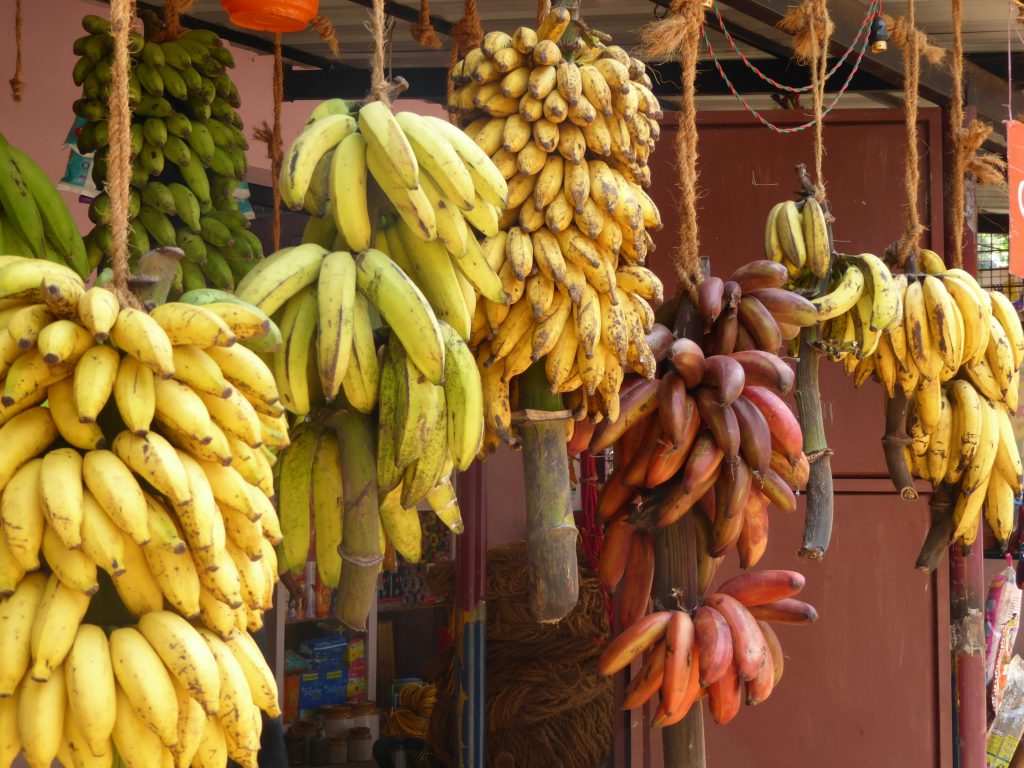
Unripe (green) bananas contain large amounts of starch, particularly resistant starch type 2 (RS2). As the fruit ripens, enzymes convert this starch into sugars such as glucose, fructose, and sucrose.
As a result:
- Resistant starch decreases
- Simple sugars increase
- Sweetness rises
Research analyzing banana composition confirms that resistant starch levels drop substantially during ripening as starch converts into digestible sugars (Englyst et al., 2006).
These changes appear to influence metabolic responses. In glycemic testing, riper bananas typically produce higher blood glucose responses than less-ripe fruit (Hermansen K. et al. (1992).
For most people, ripeness likely affects blood sugar more than freezing does.
What Is Resistant Starch — and Why It Matters
Resistant starch behaves differently from typical carbohydrates.
Instead of being fully digested in the small intestine, it reaches the colon where gut bacteria ferment it into short-chain fatty acids, including butyrate. These compounds are often studied for potential metabolic and gut health effects.
Clinical research suggests resistant starch may support metabolic health in some populations:
- A systematic review of randomized trials found resistant starch intake may modestly improve insulin sensitivity and glycemic control (Xiong K. et al. (2021)).
- Some controlled trials report improvements in insulin sensitivity when resistant starch is consumed regularly (Robertson et al., 2005).
However, an important limitation exists:
Most studies use isolated resistant starch supplements, not naturally occurring starch in fruit.
Does Freezing Bananas Increase Resistant Starch?
This is where the internet claim gets more complicated.
A well-known food chemistry process called retrogradation can increase resistant starch in certain foods.
Retrogradation occurs when:
- Starch is heated and gelatinized
- Then cooled, allowing starch molecules to recrystallize
This process has been documented in foods like:
- cooked potatoes
- rice
- pasta
- oats
Cooling these foods after cooking can increase resistant starch type 3 (RS3) (Fuentes-Zaragoza et al., 2011).
However, bananas are typically not cooked before freezing.
Because gelatinization usually requires heat, the retrogradation mechanism observed in rice or potatoes may not occur to the same degree in raw bananas.
At present, few human studies directly measure resistant starch changes in frozen raw bananas.
What Freezing Actually Does to Bananas
Cold storage does affect banana chemistry—but mostly through ripening and cellular changes.
Research on banana physiology shows that low temperatures can influence enzyme activity and carbohydrate metabolism during storage (Yang et al., 2016).
Freezing can also:
- rupture plant cell walls
- change texture
- slightly alter starch structure
However, these changes do not necessarily translate into large increases in resistant starch or meaningful blood sugar changes.
Human feeding trials comparing fresh vs frozen banana smoothies remain scarce.
Why Smoothie Ingredients Matter for Blood Sugar
Another factor often overlooked in the frozen-banana discussion is smoothie composition.
A smoothie is rarely just fruit. Many contain ingredients such as:
- protein powders
- nut butters
- seeds
- leafy greens
- dairy or plant milk
Each of these components can influence digestion speed and glucose response.
Large nutrition studies have shown that people can have dramatically different blood sugar responses to the exact same foods (Zeevi et al., 2015).
That means two people drinking the same banana smoothie may experience very different glucose readings.
Practical Ways to Build a Lower-Glycemic Smoothie
If the goal is steadier blood sugar after smoothies, research generally suggests focusing on overall meal balance, not just freezing fruit.
Helpful strategies may include:
Pair fruit with protein
- whey protein
- Greek yogurt
- collagen peptides
Add healthy fats
- almond butter
- chia seeds
- flaxseed
Increase fiber
- spinach or kale
- psyllium husk
- oats
These ingredients may slow digestion and moderate glucose response.
Top Evidence-Based Smoothie Additions
Some commonly used smoothie ingredients have stronger research support for metabolic effects than frozen fruit alone.
Examples include:
Green banana flour (resistant starch source)
Often used to increase RS2 intake.
High-quality greens powders
Some contain polyphenols and fiber that may influence glycemic response.
Protein powders (whey or plant protein)
Protein can slow gastric emptying and blunt glucose spikes.
When selecting supplements or powders, look for third-party testing certifications, such as NSF, USP, or ConsumerLab verification.
Always consult a healthcare professional before starting new supplements, particularly if managing blood sugar conditions or taking medications.
The Bottom Line
Freezing bananas before blending may slightly change their physical structure, but current evidence does not clearly show that freezing alone significantly increases resistant starch or lowers blood sugar response.
Research suggests other factors are likely more influential:
- Banana ripeness
- Overall smoothie composition
- Individual metabolic differences
While the frozen-banana theory is scientifically plausible, more controlled human studies are needed to confirm meaningful metabolic effects.
For now, focusing on balanced smoothie ingredients and portion size may be a more evidence-based strategy for steady energy and metabolic health.
Disclosure
This content is for informational purposes only and is not a substitute for professional medical advice. We may earn a commission from qualifying purchases.
References
- Englyst KN et al. (2006). Classification and measurement of nutritionally important starch fractions. European Journal of Clinical Nutrition.
https://pubmed.ncbi.nlm.nih.gov/16469977/ - Hermansen K. et al. (1992). Influence of ripeness of banana on the blood glucose and insulin response in type 2 diabetic subjects. Diabetic Medicine.
https://pubmed.ncbi.nlm.nih.gov/1395467/ - Xiong K. et al. (2021). Effects of resistant starch on glycaemic control: a systematic review and meta-analysis. British Journal of Nutrition.
https://pubmed.ncbi.nlm.nih.gov/32959735/ - Robertson MD et al. (2005). Insulin-sensitizing effects of dietary resistant starch. American Journal of Clinical Nutrition.
https://pubmed.ncbi.nlm.nih.gov/19369374/ - Zeevi D et al. (2015). Personalized nutrition by prediction of glycemic responses. Cell.
https://pubmed.ncbi.nlm.nih.gov/26590418/